The Vanishing Act: How Promising Lab Results Dissolve Under the Weight of Reality

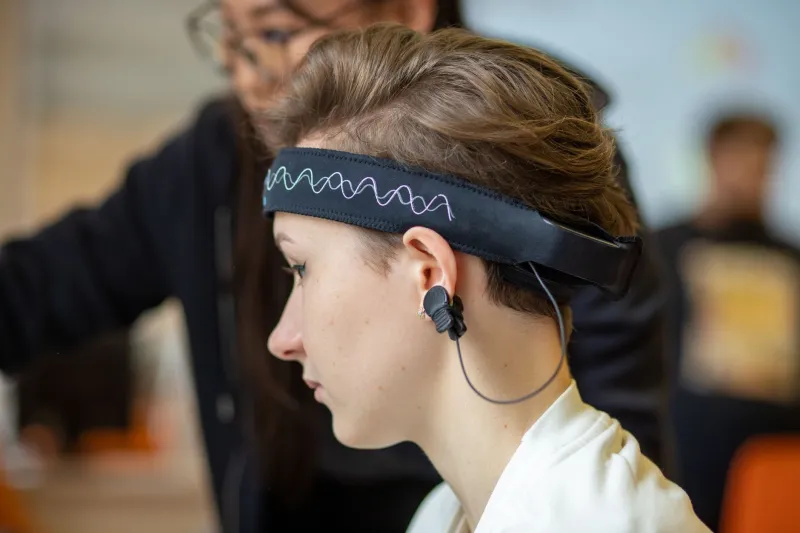
Photo by Photo by Logan Gutierrez on Unsplash on Unsplash
There is a particular kind of disappointment that arrives not with a dramatic failure, but with silence. A treatment that reversed cognitive decline in mouse models shows no measurable effect in human trials. A machine learning classifier that achieved 97% accuracy on curated datasets crumbles when exposed to real patient data. A neurostimulation protocol that produced consistent results across twelve laboratory sessions becomes unreliable the moment it moves into a clinical ward. The experiment worked. The world, apparently, did not get the memo.
This is the reproducibility crisis—a slow-moving catastrophe embedded within the infrastructure of modern science. Estimates published in peer-reviewed literature suggest that somewhere between 50% and 70% of experimental findings cannot be reliably replicated outside the conditions in which they were originally produced. In fields as consequential as neuroscience, oncology, and materials science, the implications extend well beyond academic embarrassment. They shape funding decisions, influence clinical protocols, and in some cases determine whether patients receive effective care.
Controlled by Design, Fragile by Nature
The laboratory is, by definition, an exercise in constraint. Variables are isolated. Populations are homogenized. Environmental conditions are stabilized. This precision is not a flaw—it is the mechanism by which science generates signal from noise. The problem emerges when that signal is mistaken for a universal truth rather than a conditional one.
Consider how most preclinical neuroscience research is conducted. Animal models are typically drawn from genetically uniform strains, housed under identical lighting cycles, fed standardized diets, and tested by researchers who share a common set of assumptions about what a successful outcome looks like. These conditions are reproducible within the lab. They bear only a passing resemblance to the biological and environmental complexity of a human nervous system operating inside a body shaped by decades of idiosyncratic experience.
When findings from these experiments are extrapolated into clinical or commercial contexts, they encounter a world that was not designed to cooperate. Patient populations are heterogeneous. Clinical environments introduce variables that no protocol anticipated. The researchers administering follow-up studies bring different implicit biases, different equipment calibrations, and different institutional pressures.
The Statistical Architecture of Fragility
Beyond environmental mismatch, the reproducibility crisis has a second, more technical dimension rooted in how scientific results are generated and reported. Small sample sizes, combined with the widespread practice of testing multiple hypotheses until a statistically significant result emerges—a method colloquially known as p-hacking—have populated the literature with findings that are, in a rigorous sense, accidents.
Publication bias compounds the damage. Journals have historically favored positive results, creating a body of literature that systematically underrepresents null findings. A researcher who fails to replicate a celebrated result faces a difficult publishing environment, which means failed replications often go unreported. The scientific record, viewed from the outside, looks far more consistent than the underlying reality warrants.
A landmark 2015 project coordinated by the Center for Open Science attempted to reproduce 100 psychological studies. Fewer than half yielded results consistent with the originals. A similar effort in cancer biology found that only a fraction of high-profile preclinical findings could be replicated with fidelity. These were not marginal studies. They were foundational papers that had shaped research agendas and attracted substantial funding.
Emerging Methodologies at the Validation Frontier
The crisis has not gone unaddressed. Across institutions and disciplines, a new generation of methodological frameworks is attempting to close the gap between laboratory promise and real-world performance.
Pre-registration has emerged as one of the most structurally sound interventions. Researchers commit to their hypotheses, sample sizes, and analytical approaches before data collection begins, eliminating the post-hoc flexibility that enables p-hacking. Platforms such as the Open Science Framework have facilitated thousands of pre-registered studies, and funding bodies including the National Institutes of Health have begun incorporating pre-registration requirements into grant conditions.
Multi-site replication studies represent another significant development. Rather than trusting a single laboratory's result, these initiatives distribute identical protocols across multiple research environments simultaneously, producing findings that are robust to local idiosyncrasies from the outset. The expense is considerable, but the epistemic return is proportionally higher.
In neurotechnology specifically, where the gap between controlled stimulation parameters and real-world neural variability is particularly pronounced, adaptive experimental designs are gaining traction. These frameworks build variation into the study itself, testing interventions across a range of conditions rather than optimizing for a single idealized scenario. The resulting findings are less elegant but substantially more durable.
The Institutional Dimension
Methodology alone cannot resolve a crisis that is partly structural. Academic incentive systems continue to reward novelty over verification. A researcher who devotes years to replicating another laboratory's work produces fewer publishable papers, accrues less citation impact, and competes less effectively for tenure and grant funding than a peer who generates a stream of new—if fragile—discoveries.
Several universities and research consortia have begun experimenting with alternative evaluation frameworks that assign explicit value to replication work. The Reproducibility Project at the University of Virginia, and similar initiatives embedded within large research universities across the country, are attempting to demonstrate that verification science can be institutionally legitimate and intellectually substantive. Progress is incremental, but the direction is correct.
Funding agencies occupy a particularly influential position in this ecosystem. When the NIH, DARPA, or private foundations such as the Chan Zuckerberg Initiative attach replication requirements or open-data mandates to their grants, the incentive calculus for individual researchers shifts meaningfully. Policy levers, in this domain, may prove more effective than cultural appeals.
What Survives the Translation
Not everything dissolves under real-world conditions. Findings that survive tend to share certain characteristics: large and demographically diverse sample populations, pre-registered analytical plans, transparent reporting of null results, and independent replication prior to widespread dissemination. They are also, almost invariably, findings that were subjected to adversarial scrutiny rather than celebrated prematurely.
The reproducibility crisis is, at its core, a story about the distance between what a controlled experiment can tell us and what the world actually demands of that knowledge. Laboratories are extraordinary instruments for generating hypotheses. They are less reliable as the final word on whether those hypotheses are true in any general sense.
Closing that distance requires not just better statistical practices or more rigorous protocols, but a fundamental reconception of what scientific credibility means—one that values durability over novelty and treats replication not as a bureaucratic formality, but as the most important experiment of all.