Rewriting the Past: The Science and Peril of Selective Memory Erasure
For most of human history, the past was immutable. Whatever a person experienced — whether a battlefield, a car accident, or an act of violence — that experience was encoded in the brain and, barring neurological injury, remained there permanently. Memory was considered foundational to identity, to legal accountability, and to the very continuity of the self. That assumption is now being tested in laboratories across the United States, where neuroscientists and biotech startups are developing tools precise enough to locate a specific traumatic memory and, with increasing confidence, diminish or erase it entirely.
The implications are profound. So are the risks.
The Mechanics of Memory Targeting
Memory is not stored like a file on a hard drive. Each recollection is a distributed neural pattern — a constellation of synaptic connections that must be actively reconstructed every time the brain retrieves it. This reconstruction process, known as reconsolidation, is the critical vulnerability that researchers are now learning to exploit.
When a memory is recalled, it temporarily re-enters a labile, malleable state before being re-stabilized. During that brief window — sometimes as short as a few hours — the memory is susceptible to disruption. Researchers at institutions including New York University and the University of California, San Francisco have demonstrated that introducing pharmacological agents such as propranolol, a beta-blocker, or more experimental compounds during reconsolidation can weaken the emotional charge of a traumatic memory without necessarily eliminating the factual record of the event.
More recent work goes further. Optogenetic techniques, pioneered in animal models, allow researchers to tag specific neurons active during a fear-inducing experience using light-sensitive proteins, then selectively suppress those cells with targeted light pulses. In rodent studies, this has produced what amounts to surgical memory removal — the animal retains general cognitive function while showing no measurable fear response to previously conditioned stimuli. The leap to human application remains significant, but it is no longer considered categorically impossible.
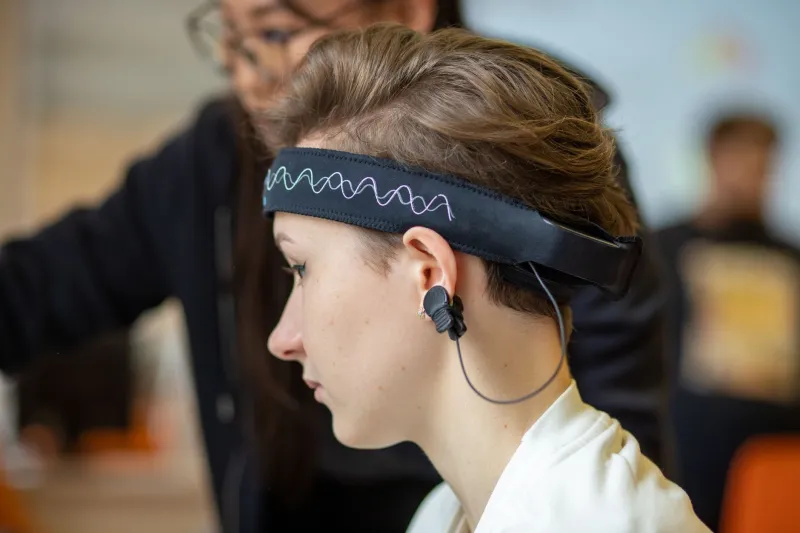
Neural interface companies are watching this space closely. Firms already operating in the brain-computer interface sector — including several with DARPA funding through programs explicitly targeting PTSD in veterans — are exploring whether closed-loop stimulation systems could be trained to identify the neural signatures of traumatic recall and intervene in real time.
From the VA to the Venture Capital Pitch Deck
The commercial incentive is substantial. The National Center for PTSD estimates that approximately 13 million Americans are living with post-traumatic stress disorder in any given year. Existing treatments — cognitive behavioral therapy, EMDR, pharmacotherapy — achieve meaningful results for many patients but leave a significant portion inadequately treated. For that population, the prospect of a technology that could reduce or eliminate the neurological substrate of suffering is not a dystopian thought experiment. It is a medical imperative.
Private investment is beginning to reflect this urgency. Several biotech firms in the Boston-Cambridge corridor and in the Bay Area are advancing memory-modulation compounds through early clinical trials, while at least two neural interface startups have disclosed internal research programs focused on trauma-targeted stimulation. These efforts operate largely outside public scrutiny, protected by trade secrecy and the relatively underdeveloped regulatory framework governing neural devices.
The FDA's current classification system for neurostimulation devices was not designed with memory modification in mind. Regulatory guidance on what constitutes a memory-altering intervention — and how such a device or drug should be evaluated for safety and efficacy — remains, at best, a work in progress.
The Ethical Architecture Nobody Has Built Yet
The technical progress is outpacing the ethical infrastructure needed to govern it, a pattern that has become distressingly familiar in emerging technology sectors.
Consent presents the first and most immediate complication. A patient seeking relief from debilitating PTSD may sincerely want a traumatic memory reduced in intensity. But can informed consent be meaningfully granted for a procedure that alters the very cognitive record the patient would use to evaluate the decision? Memory is not merely data; it is the substrate through which individuals understand who they are and how they arrived at the present moment. Modifying it changes the person in ways that may be difficult to predict and impossible to reverse.
Legal liability raises separate concerns. In criminal proceedings, eyewitness memory — already understood to be unreliable — is treated as evidence. A victim who has undergone memory modification therapy occupies genuinely novel legal territory. Defense attorneys in future cases may argue that modified memories are inadmissible. Prosecutors may counter that the underlying event remains factually documented even if the victim's subjective recollection has been altered. No court in the United States has yet adjudicated this question, because the technology has not yet produced a test case. It will.
Perhaps the most underexamined concern is psychological. Traumatic memories, despite the suffering they cause, are not neurologically inert. They shape threat-detection, inform risk assessment, and in some cases form the basis of empathy and moral development. Research on patients who have experienced severe amnesia due to hippocampal damage suggests that the removal of autobiographical memory does not produce relief so much as disorientation — a sense of groundlessness that generates its own pathology. Whether targeted suppression of specific memories would produce comparable effects remains an open empirical question.
There is also the question of who decides which memories qualify for erasure. The answer seems obvious when the candidate is a combat veteran reliving an ambush. It becomes considerably less clear when the candidate is a witness to a crime, a participant in a contested legal dispute, or an individual whose trauma is inseparable from a political or social experience shared with others.
What the Lab Cannot Resolve
Researchers working in this field tend to be careful, methodical scientists motivated by genuine therapeutic goals. They are also operating within a broader technological and commercial ecosystem that has repeatedly demonstrated an appetite for scaling first and reckoning with consequences later.
The neurotechnology sector has already produced devices that can read emotional states, decode imagined speech, and modulate mood through targeted stimulation. Memory modification is a logical extension of this trajectory, not an aberration. That continuity should prompt serious institutional attention — from the FDA, from Congress, from the bioethics community, and from the public — before the first consumer-facing product reaches the market.
Erasing a traumatic memory may relieve suffering. It may also erase the context that makes a person who they are, sever the testimony that holds perpetrators accountable, or substitute one form of psychological distress for another that researchers have not yet learned to name. The forgetting curve, as the nineteenth-century psychologist Hermann Ebbinghaus described it, was a natural process — gradual, involuntary, and universal. What is being developed in contemporary labs is something categorically different: the deliberate, targeted engineering of what a human being is allowed to remember.
That is a remarkable capability. Whether it is a therapeutic breakthrough or a civilizational risk — or, most likely, both simultaneously — will depend entirely on the frameworks built to contain it. Those frameworks do not yet exist.