Verified or Viral: The Quiet Collapse of Scientific Rigor in the Age of the Breakthrough Headline

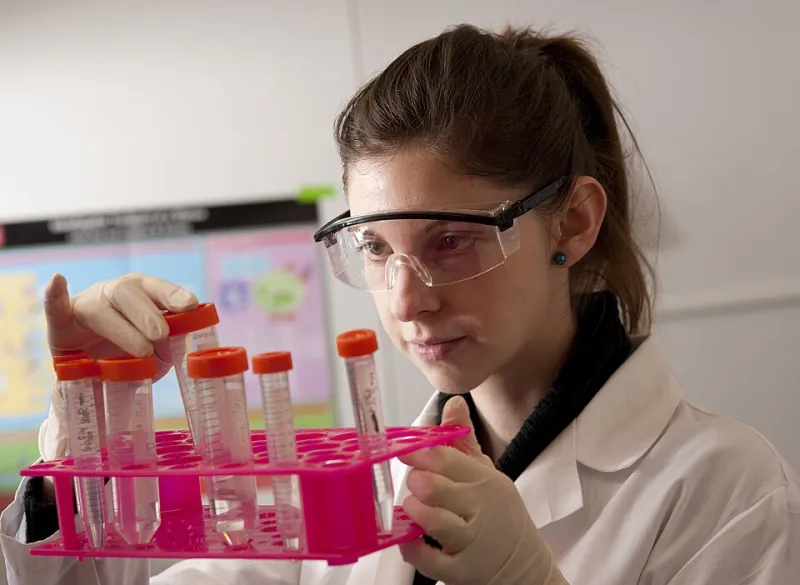
Photo: scientist reviewing data charts in research laboratory, via img.freepik.com
In the spring of 2023, a mid-sized biotechnology startup announced what its press release described as a "paradigm-shifting" battery chemistry capable of tripling energy density at a fraction of existing manufacturing costs. Within 48 hours, the announcement had circulated through every major technology newsletter in the country. Within six months, three independent research teams had attempted replication. None succeeded.
This is not an isolated incident. It is, increasingly, the norm.
The Numbers Behind the Noise
The reproducibility crisis—a term that first gained widespread traction in psychology research circles around 2015—has migrated with quiet ferocity into materials science, machine learning, and bioengineering. A 2022 survey conducted by the journal Nature found that more than 70 percent of researchers across scientific disciplines had attempted and failed to reproduce another laboratory's published results. More troubling still, over half reported failing to reproduce their own prior work.
In technology-adjacent fields, where the distance between academic publication and commercial application is often measured in months rather than decades, the stakes of irreproducibility are particularly acute. Venture capital firms have poured billions of dollars into companies whose foundational science was never subjected to independent scrutiny. The consequences—delayed products, stranded capital, and eroded public trust—are only beginning to accumulate.
Incentives Designed for Discovery, Not Verification
To understand how this crisis perpetuates itself, it is necessary to examine the architecture of modern scientific incentives. Academic researchers are evaluated primarily on publication volume and citation impact. Journals, which remain the primary arbiters of scientific legitimacy, exhibit a well-documented preference for novel, positive results. Negative findings—including failed replication attempts—are systematically undervalued and frequently rejected outright.
Dr. Alicia Moreno, a materials scientist at a major public research university in the Midwest, described the dynamic plainly in a recent interview. "If I spend eighteen months attempting to reproduce someone else's work and I fail, I have nothing publishable. My tenure case looks weaker. My graduate students have nothing to put on their CVs. The rational career move is to move on and chase your own novel result."
This structural disincentive creates a one-way ratchet. Findings accumulate in the literature without ever being stress-tested. Citations compound on a foundation that nobody has examined closely enough.
Startups operate under a parallel but distinct set of pressures. In a funding environment that rewards bold narratives and rapid milestones, the temptation to present preliminary laboratory results as validated science is considerable. The venture capital model, with its emphasis on speed and narrative momentum, has little patience for the slow, unglamorous work of verification.
The Conditions That Cannot Be Cloned
Beyond incentive structures, there are genuine technical barriers to reproducibility that are rarely discussed in mainstream technology coverage. Laboratory conditions are far more variable than published methodologies typically acknowledge. Temperature fluctuations, reagent batch inconsistencies, equipment calibration drift, and even the subtle differences in how individual researchers handle materials can produce dramatically divergent results.
In computational research, reproducibility failures often stem from undisclosed software dependencies, hardware-specific numerical precision differences, or the use of proprietary datasets that cannot be shared. A machine learning model trained on a specific GPU cluster at one institution may behave measurably differently when retrained on ostensibly identical hardware elsewhere.
James Whitfield, a computational neuroscientist who has spent the past three years attempting to replicate a widely cited neural decoding study, described his experience at a recent conference. "The original paper was meticulous by the standards of the field. But when we contacted the authors for their preprocessing pipeline, we discovered it had been modified seventeen times after submission. The version in the paper and the version that produced their results were not the same."
The 'Next Big Thing' Narrative as Epistemic Hazard
American technology culture has long been organized around the mythology of the breakthrough—the singular moment of discovery that reshapes an entire industry. This narrative is not merely a journalistic convention; it shapes how funding flows, how careers are built, and how the public understands scientific progress.
The problem is that breakthrough narratives compress and distort the actual structure of scientific knowledge. They present individual findings as settled conclusions rather than provisional data points in an ongoing process of collective verification. When a result is described as a "revolution" in a TechCrunch headline before it has been independently confirmed, a kind of epistemic debt is created. Subsequent failures to replicate are framed as anomalies rather than as the normal functioning of the scientific method.
This cultural dynamic has a measurable effect on research behavior. When a laboratory's work achieves viral attention, the pressure to defend and extend that work—rather than subject it to rigorous scrutiny—intensifies substantially.
What Genuine Verification Infrastructure Would Require
Several researchers and institutional reformers have proposed concrete mechanisms for rebuilding verification culture into the scientific enterprise.
Registered replication initiatives, in which journals commit in advance to publishing replication attempts regardless of outcome, have shown promise in psychology and are beginning to gain traction in adjacent fields. Pre-registration of experimental hypotheses—requiring researchers to publicly document their predictions before collecting data—reduces the scope for post-hoc rationalization of results.
On the funding side, the National Science Foundation and the National Institutes of Health have both piloted grant mechanisms specifically designed to support replication work. These programs remain dramatically underfunded relative to discovery-oriented research, but their existence represents an acknowledgment that verification is a legitimate scientific activity, not merely a bureaucratic formality.
At the institutional level, some universities are beginning to experiment with tenure evaluation criteria that weight replication contributions alongside novel publications. The pace of change is slow, but the direction is encouraging.
The Cost of Continuing as Before
The reproducibility crisis is sometimes characterized as a problem internal to science—a matter of professional norms and publication practices that has little relevance to the broader technology ecosystem. This framing is mistaken.
Every irreproducible finding that enters the pipeline of commercial development consumes engineering resources, delays legitimate innovation, and contributes to the broader erosion of public confidence in scientific institutions. In sectors where the United States is engaged in genuine strategic competition—advanced semiconductors, artificial intelligence, biotechnology—the cost of building on unverified foundations is not merely financial. It is a competitive liability.
The laboratory is, at its best, a place where claims are tested against reality with ruthless honesty. Restoring that function—not just as an aspiration but as a structural feature of how science is funded, published, and rewarded—may prove to be the most consequential experiment of the coming decade.