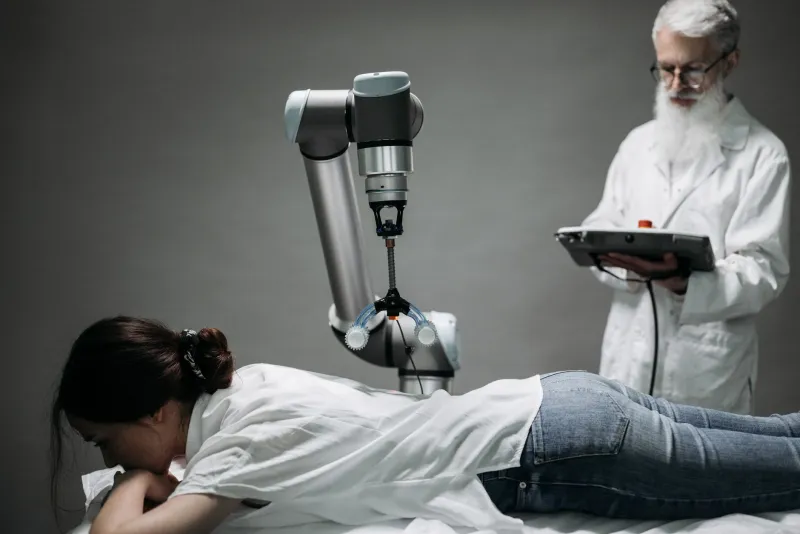
Layer by Layer: The Race to Transplant a Printed Organ—and the Reckoning That Follows
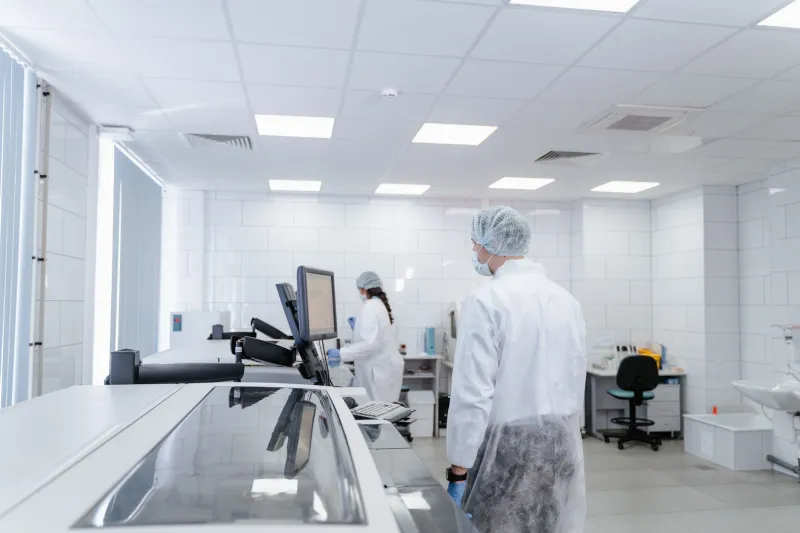
Somewhere in a temperature-controlled room at Wake Forest Institute for Regenerative Medicine, a cartridge loaded with living cells moves in precise, programmed arcs over a hydrogel scaffold. The device looks, from a distance, almost unremarkable—a modified inkjet printer, essentially. What it deposits, however, is not ink. It is the architectural beginning of a human kidney.
This is bioprinting in 2025: a discipline that has migrated from speculative white papers into functioning laboratory prototypes with a speed that has left both regulators and ethicists visibly winded. The promise is extraordinary. The United States alone maintains a transplant waiting list that exceeds 100,000 patients at any given moment, with roughly twenty people dying each day while waiting for a donor organ. Synthetic tissue engineering, its proponents argue, is the only intervention with the theoretical scale to close that gap permanently.
But the distance between a printed construct that survives in a petri dish and one that performs reliably inside a human body is, by most honest assessments, still considerable. And the laboratories sprinting toward that finish line are increasingly operating in a space where the science is outrunning the frameworks designed to govern it.
What the Printers Are Actually Building
Modern bioprinting is not a single technology. It is a convergence of several—extrusion-based printing, stereolithography, laser-assisted deposition—each suited to different tissue types and structural demands. The most advanced facilities are now producing constructs of genuine complexity: vascularized cardiac patches capable of contracting in synchrony with native heart tissue, liver organoids that metabolize compounds in ways that closely mimic their biological counterparts, and tracheal scaffolds that have already been implanted in compassionate-use cases.
At the University of California San Diego, researchers have demonstrated the ability to print neural tissue with embedded microchannels that encourage axonal growth—work with direct implications for spinal cord repair and, more distantly, for the kind of brain-interface applications that increasingly define the frontier of neurotechnology. The crossover between bioprinting and neuroscience is not incidental. As printed tissue grows more sophisticated, the question of whether a lab-grown neural construct possesses any form of rudimentary function—however primitive—has begun appearing in serious academic literature with unsettling frequency.
Collectively, the field refers to the most structurally complex outputs as "organoids"—miniaturized, self-organizing tissue structures that replicate organ function at reduced scale. They are already transforming pharmaceutical testing, offering human-relevant models that reduce reliance on animal subjects. But organoids are not yet organs, and that distinction is where the hardest conversations begin.
The Regulatory Lag
The Food and Drug Administration has been tracking bioprinting developments with evident attentiveness. In recent years, the agency has published draft guidance on the use of human cells in regenerative medicine products and has convened workshops specifically addressing three-dimensional printed medical devices. Yet the regulatory pathway for a fully bioprinted, transplantable solid organ remains, in the words of one FDA official quoted at a 2024 symposium, "an open architecture problem."
The challenge is partly definitional. Current FDA frameworks were built around two broad categories: drugs and devices. A printed organ is, in a meaningful sense, neither—or perhaps both simultaneously. It contains living cells that respond dynamically to their environment, which complicates the static safety-and-efficacy testing models developed for conventional medical products. The agency's Center for Biologics Evaluation and Research is the most likely regulatory home for such products, but the division's existing toolkit was not designed with vascularized solid organs in mind.
State-level oversight adds another layer of complexity. Several research institutions operating under compassionate-use exemptions have advanced clinical work that exists in a regulatory gray zone, technically permissible but absent the structured oversight that a formal approval pathway would require. Critics argue this creates an environment where the most aggressive laboratories effectively set their own standards by default.
The Ethics of the Almost-Real
The bioethics community has been raising alarms with increasing urgency, though the specific concerns vary depending on whom one asks. For some, the primary anxiety is premature clinical application—the fear that commercial and reputational pressures will push institutions to attempt transplants before the science genuinely supports it, exposing vulnerable patients to unquantified risk.
Others are focused on a more philosophically unsettling horizon. As printed neural constructs become more sophisticated, and as organoids demonstrate increasingly complex emergent behaviors, the question of moral status begins to surface. It is a question the field has largely preferred to defer. "We are building biological systems of growing complexity without having established any consensus on what properties would obligate us to treat them differently," noted Dr. Françoise Baylis, a prominent bioethicist whose work has increasingly addressed synthetic biology, in a recent lecture at Johns Hopkins.
There is also the matter of access. The manufacturing processes involved in patient-specific bioprinting—using a recipient's own cells to minimize rejection risk—are currently expensive, time-intensive, and dependent on specialized infrastructure that does not exist outside a small number of research centers. If the technology matures into clinical viability without a deliberate strategy for equitable distribution, it risks replicating and amplifying the existing inequities of the transplant system rather than resolving them.
Where the Frontier Actually Sits
For all the complexity, the researchers closest to the work remain, on balance, cautiously optimistic about the trajectory. Simpler tissues—skin grafts, cartilage, corneas—have already made the transition from laboratory to limited clinical use. Bladders reconstructed from bioengineered scaffolds seeded with patient cells have been implanted in small human trials. The vascular and structural challenges that have historically blocked progress on solid organs like the heart and kidney are being addressed through new bioink formulations and sacrificial templating techniques that leave behind hollow channels suitable for perfusion.
The honest estimate from most researchers, offered without the promotional inflation that sometimes accompanies public-facing science communication, is that the first fully bioprinted solid organ transplant in a human patient is probably ten to fifteen years away under current trajectories—potentially closer if materials science and bioreactor technology continue advancing at their present pace.
That timeline is simultaneously encouraging and sobering. Encouraging, because it is no longer the domain of pure speculation. Sobering, because it means the ethical and regulatory infrastructure needs to be built now, while the science is still approaching rather than arriving.
The Experiment That Cannot Wait
At TotomtLab, we observe a recurring pattern in emerging technology: the engineering tends to accelerate faster than the governance, and the governance faster than the cultural and ethical frameworks needed to give it meaning. Bioprinting is following that pattern with particular fidelity.
The laboratories printing organs before we are ready are not acting irresponsibly, for the most part. They are doing what laboratories do—pushing forward, testing limits, generating knowledge. The responsibility for ensuring that knowledge lands in a world prepared to use it wisely belongs to a much wider set of institutions: regulatory agencies, bioethics boards, hospital systems, insurers, and ultimately the public that will one day be asked to decide what it means to receive a heart that was never, in any traditional sense, alive before it was needed.
That decision is coming. The printers are not waiting.